The Immigration Habeas Landscape in the District of New Jersey
A Data-Driven Study of 896 Immigration Habeas Petitions Filed in 2026
Last Updated 8/30/26
What actually happens when detained immigrants file habeas petitions in the District of New Jersey?
To answer that question, Maria Lurye Law analyzed 896 immigration-related habeas petitions filed between January and April 2026, using publicly available federal court data and docket records. The study examines who filed these petitions, the arguments raised, how the courts ruled, what remedies were ordered, and, most importantly, what those outcomes mean for practitioners representing detained immigrants.
The data reveals an 83% success rate among cases in which the court's ruling could be identified, but the numbers tell only part of the story. The study also identifies significant differences in the remedies ordered, the speed with which cases were resolved, and the strategies that proved most effective.
The study examines questions including:
What detention arguments are winning—and how often?
Does the assigned district judge affect the likelihood of success?
When petitioners win, are courts ordering release or merely a bond hearing?
What arguments can lead to release when a bond hearing has already occurred?
How are courts addressing prolonged detention and due process claims?
What procedural mistakes can delay or derail a habeas petition?
How has the legal landscape changed following the Third Circuit's decision in Buele Morocho v. Warden Philadelphia FDC?
What should practitioners ask for when filing—and what should they do when an immigration judge subsequently denies bond?
The study combines quantitative analysis of hundreds of cases with a closer examination of key decisions, providing practitioners with a practical picture of the habeas landscape in the District of New Jersey.
Why This Matters
Habeas litigation is moving quickly, and the law is developing alongside an unprecedented volume of immigration detention litigation. Understanding the outcomes of actual cases can help practitioners identify emerging patterns, anticipate government arguments, avoid procedural pitfalls, and make more informed decisions about the relief they seek.
This study is intended as a practitioner-focused resource for attorneys handling immigration detention and habeas cases in the District of New Jersey.
Read the full study: The Immigration Habeas Landscape in the District of New Jersey, January–April 2026
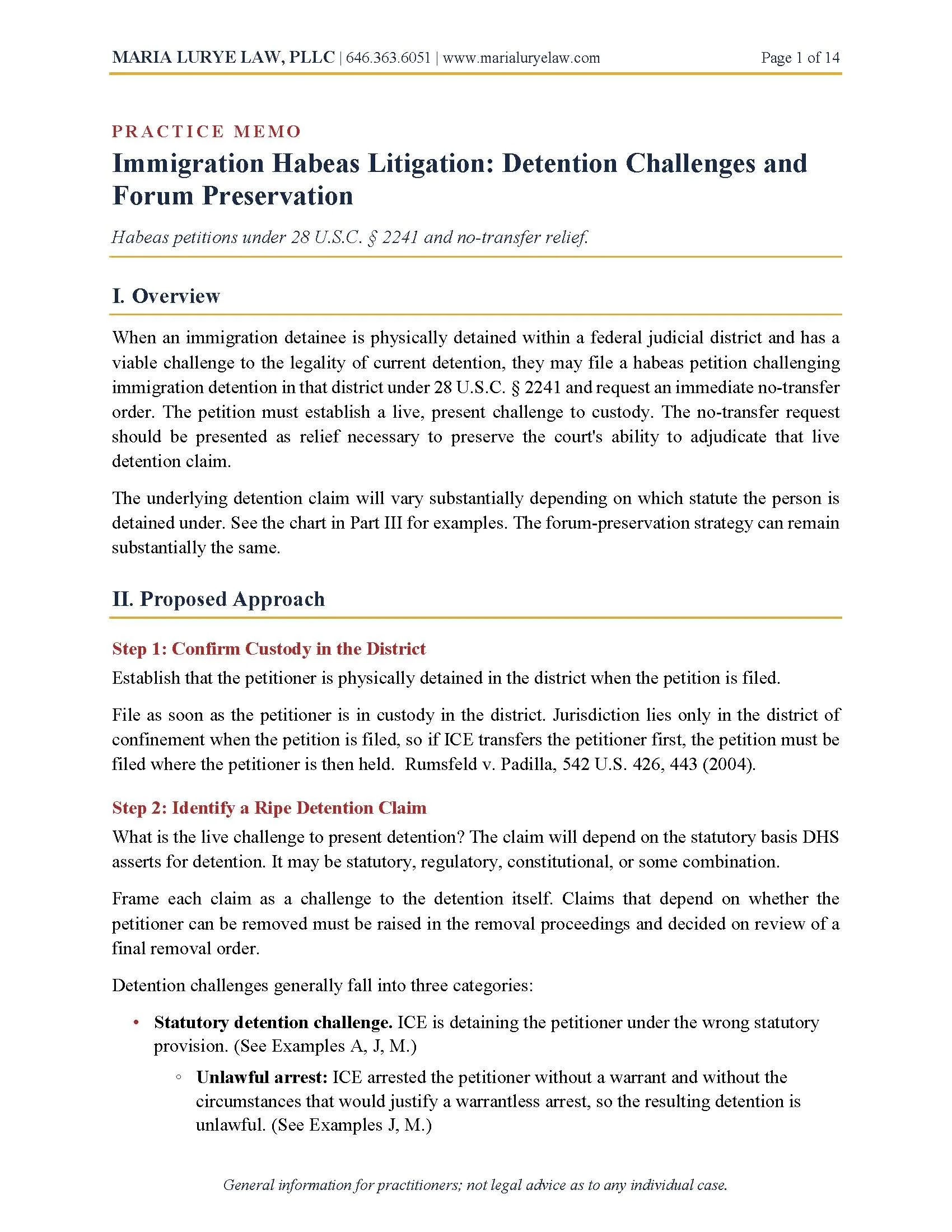
Immigration Habeas Litigation: Detention Challenges and Forum Preservation
Published 10/14/26
This practice memo provides a practical framework for challenging the legality of immigration detention through federal habeas litigation under 28 U.S.C. § 2241. It examines potential statutory, regulatory, and constitutional challenges to detention under 8 U.S.C. §§ 1225, 1226, and 1231, while addressing the procedural and strategic considerations necessary to pursue effective judicial relief.
The memo offers a step-by-step approach to identifying viable detention claims, addressing administrative exhaustion, establishing jurisdiction, and seeking emergency no-transfer relief to preserve meaningful judicial review. A detailed chart of hypothetical cases identifies potential habeas arguments, supporting authority, anticipated DHS responses, and strategies for addressing those responses.
Designed for immigration practitioners, this resource connects substantive detention challenges with practical federal litigation strategy, helping attorneys evaluate potential claims, anticipate obstacles, and develop case-specific approaches to challenging unlawful detention.